
US Fires Weapons in South China Sea: USS Abraham Lincoln Live-Fire Drills
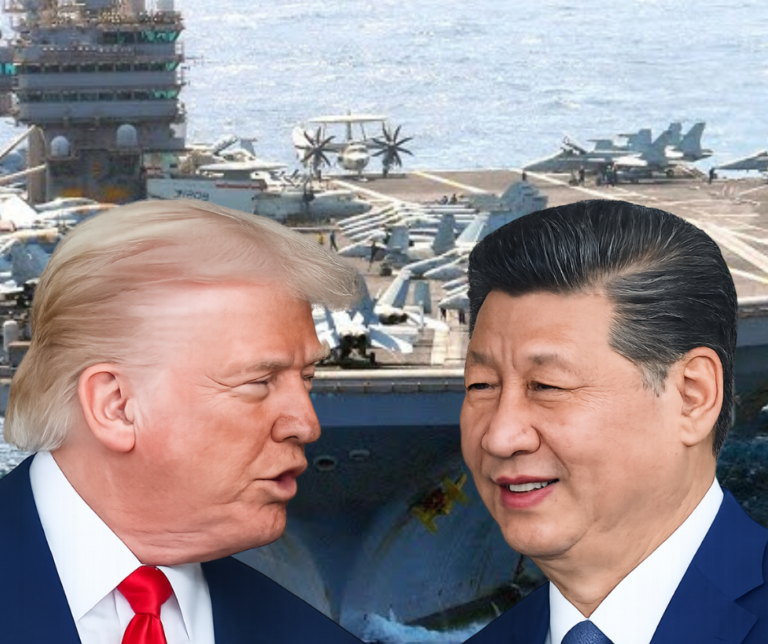
The USS Abraham Lincoln, of the U.S. Navy has recently discharged firearms in South China Sea attracting the attention of the world because of the emerging and swirling military relationships in the Indo-Pacific region. These weapons rollouts were officially referred to as routine live-fire drills but these rollouts coincided with an increase in geopolitical tensions due to Chinese military operations off of Taiwan and an extended history of maritime conflict over territorial claims in the South China Sea and adjacent waters.
The exercises were said to include sophisticated defensive measures including the Phalanx Close-In Weapon System(CIWS), which was used in the defense of the carrier and its strike group against incoming threats and under the U.S. 7th Fleet command USS Abraham Lincoln was in company with her escort ships.
This article will attempt to find out what exactly transpired during these weapon shots, why the U.S. Navy is working in disputed waters and what the ramification of this practice means to the stability of the area particularly to nations with maritime territory that borders on the expansive claims of China. We will discuss all that you should know about this controversial development in the military capabilities as well as geopolitical circumstances and its strategic consequences.
USS Abraham Lincoln South China Sea Live-Fire Drills
Keywords / LSI Terms
- USS Abraham Lincoln South China Sea live-fire drills
- US Navy Phalanx weapon firing in Indo-Pacific
- South China Sea tensions 2026
- carrier strike group operations South China Sea
- Phalanx CIWS explained
- US freedom of navigation South China Sea
- China military drills Taiwan encirclement
- US 7th Fleet routine operations Indo-Pacific
- Philippines maritime security and US Navy
- geopolitical implications of US carrier drills
- naval balance of power South China Sea
- US China naval confrontation
- ASEAN response to South China Sea militarization
- international maritime law UNCLOS South China Sea
- US Navy weapons firing training procedures
Background: USS Abraham Lincoln & the South China Sea
What is USS Abraham Lincoln?
The USS Abraham Lincoln (CVN-72) is a nuclear-powered Nimitz-class aircraft carrier of the U.S. Navy, serving as the flagship of Carrier Strike Group Three. It is one of the largest warships in service, capable of housing around 90 aircraft including fighter jets, early warning aircraft, and helicopters.
Armed with defensive systems such as the Phalanx Close-In Weapon System (CIWS), Sea Sparrow missiles, Rolling Airframe Missiles (RAM), and an array of combat aircraft, Abraham Lincoln is both a symbol and instrument of U.S. sea control and power projection.
The South China Sea: Strategic importance
The South China Sea is one of the world’s most contested maritime regions, through which trillions of dollars in trade flow annually. Dozens of islands and reefs are claimed by multiple countries including China, the Philippines, Vietnam, Malaysia, and others. Freedom of navigation and commercial rights here are central to global economics and strategic military planning.
China’s expansive “Nine-Dash Line” claim conflicts with international law and has been rejected by a 2016 Permanent Court of Arbitration ruling — a ruling China has refused to recognize. As a result, tensions remain high as the U.S. conducts freedom of navigation operations and joint exercises with allies.
What Happened: The Live-Fire Weapon Drills
Description of the weapons fired
In early January 2026, USS Abraham Lincoln was photographed firing its Phalanx CIWS, an automated, rapid-fire, radar-guided defense turret designed to intercept incoming missiles, aircraft, and small surface threats.
The drill was part of a broader set of activities including flight operations, refueling at sea, damage control training and explosive ordnance disposal exercises — all described by the U.S. Navy as “routine operations.”
Timeline of activities
After departing San Diego in November 2025, Abraham Lincoln entered the South China Sea by late December and remained there for at least two weeks as of early January 2026. Photos posted to official Defense Visual Information Distribution Service (DVIDS) show weapon systems firing on Jan. 8, 2026.
At the same time, China conducted its own live-fire drills encircling Taiwan late in December — moves Beijing described as punitive and deterrent actions.
Official Statements
A U.S. 7th Fleet spokesperson described these operations as normal training and readiness demonstrations meant to deter aggression and strengthen alliances, especially in a region marked by persistent maritime claims and military activities by multiple states.
Strategic Context in 2026
China’s military drills and Taiwan
Shortly after Abraham Lincoln entered the South China Sea, China’s Eastern Theater Command announced large-scale live-fire exercises encircling Taiwan. Beijing frames such drills as warnings against external support for Taiwanese independence.
These overlapping military activities make the region a strategic focal point, where both Washington and Beijing signal resolve and posture to allies and rivals alike.
Why the US says “routine operations”
From the Pentagon’s perspective, operations like these demonstrate presence, readiness, and commitment to ensuring open seas and interoperability with regional partners. They are described as routine because they are part of regular deployment cycles and scheduled training objectives for Carrier Strike Groups before rotation.
For Filipino researchers and stakeholders, this phrasing highlights the dual nature of such drills — both as training and as geopolitical signals.
Regional Security Dynamics
For Southeast Asian states like the Philippines and ASEAN members, U.S. naval presence serves a dual purpose: reinforcing commitments to freedom of navigation while also balancing China’s military assertiveness. However, these operations also risk entangling local states in great-power competition dynamics.
Geopolitical Implications
US-China naval rivalry
The South China Sea has become a principal arena of U.S.–China military rivalry. While Washington champions international norms and freedom of navigation, Beijing views increased carrier deployments by the U.S. as challenges to its maritime sovereignty claims. The result is often a cycle of naval patrols, air intercepts, and diplomatic protests.
Freedom of Navigation and Legal Claims
Freedom of navigation operations (FONOPs) like those that bring carriers to contested waters underscore U.S. policy that no nation should impose maritime restrictions inconsistent with international law. This principle is especially relevant where overlapping claims exist, such as in the Spratly and Paracel islands regions of the South China Sea.
Impact on Philippine Security
For the Philippines — which is directly affected by South China Sea disputes — the presence of U.S. carriers reinforces mutual defense commitments under the 1951 Mutual Defense Treaty. However, it also complicates Manila’s diplomatic balancing act with China, which is a major economic partner.
Military Analysis
Capabilities of US Carrier Strike Groups
A U.S. Carrier Strike Group (CSG) combines the firepower of the carrier’s air wing with escort destroyers and cruisers, submarines, and replenishment vessels. Abraham Lincoln’s air wing includes F/A-18 Super Hornets and F-35Cs, each capable of strike, air dominance, and reconnaissance missions.
This layered combat capability allows the CSG to respond to threats at sea, in the air, or from land — though the primary role of the drills noted in January 2026 was defensive training rather than combat engagement.
Phalanx CIWS: How it Works
The Phalanx CIWS is an automated point-defense weapon that uses radar to detect and automatically fire a dense barrage of rapid-firing projectiles at hostile targets. It is a last-ditch defense against incoming missiles and small craft and is a common component on U.S. Navy carriers and escorts.
International Law & Territorial Claims
UNCLOS and competing claims
Under the United Nations Convention on the Law of the Sea (UNCLOS), coastal states are entitled to territorial seas and exclusive economic zones (EEZs). A 2016 arbitration ruling invalidated China’s broad maritime claims, yet Beijing continues to enforce them, resulting in legal disputes with the Philippines and others.
US position on open seas
While the U.S. is not a party to UNCLOS, it adheres to its principles regarding freedom of navigation. This supports its routine transits through international waters — including those claimed by China — to defend the rights of all nations to peaceful maritime passage.
What Could Happen Next
Escalation Risks
The risk of unintentional confrontation rises when major naval powers operate in close proximity, especially when live-fire training occurs near contested features. Miscommunication, radar tracking errors, or aggressive posturing could increase these risks.
US Naval Strategy
Washington continues to emphasize forward presence and combined exercises with allies like Japan and the Philippines. This persistent forward deployment is aimed at deterring conflict but requires careful diplomacy to avoid escalation.
Regional Responses
ASEAN has called for peaceful dispute resolution and restraint, though responses vary among member states. Countries like the Philippines face pressure to remain engaged with great powers while safeguarding sovereign maritime interests.
Quick Takeaways
Key Insights
- USS Abraham Lincoln conducted live-fire weapon drills in the South China Sea as part of routine training.
- Drills included firing the Phalanx CIWS defensive system to rehearse counter-threat scenarios.
- These activities occurred amid Chinese military exercises around Taiwan, increasing strategic tension.
- The U.S. Navy describes operations as routine, but regional geopolitics make them symbolically significant.
- Presence of U.S. carriers affects regional security calculus for ASEAN states such as the Philippines.
Conclusion
The recent weapons firing by USS Abraham Lincoln in the South China Sea is a clear example of how maritime military operations serve not only tactical training needs but also broader geopolitical signaling. While the U.S. government insists these were routine defensive drills, their timing alongside intensified Chinese military activities — including live-fire exercises encircling Taiwan — underscores the increasingly contested nature of the Indo-Pacific strategic environment.
For countries such as the Philippines, whose own maritime claims intersect with those of China, these developments carry immediate and long-term implications. On the one hand, the presence of a powerful U.S. carrier strike group signals continued American engagement and a deterrent against coercive actions. On the other, persistent great-power competition also introduces risks of miscalculation and destabilizing military encounters.
From an international law standpoint, freedom of navigation operations and weapons drills within disputed waters highlight conflicting interpretations of maritime rights. While the United States frames these actions as upholding global norms, China rejects external naval presence that it views as infringing on its territorial claims.
As the strategic balance in the South China Sea continues to evolve, it will be vital for regional partners and stakeholders to carefully navigate these pressures. Clear communication, diplomatic engagement, and confidence-building measures can help reduce the risks of unintended escalation while promoting stability in one of the world’s most critical waterways.
FAQs
Did the USS Abraham Lincoln fire weapons in the South China Sea?
Yes — the carrier conducted live-fire defensive drills involving the Phalanx CIWS, which were publicly documented in January 2026.
Why is the U.S. Navy operating in the South China Sea?
The U.S. conducts operations to support freedom of navigation, strengthen alliances, and deter aggression in contested waters.
Are these weapon drills a sign of war?
No — U.S. officials maintain that they are routine training, not combat actions, but they occur in a sensitive geopolitical context.
What is the Phalanx CIWS system fired by the carrier?
It’s a radar-guided rapid-fire defensive weapon designed to intercept incoming threats at short range.
How do these actions affect the Philippines?
Philippine security policy must balance cooperation with the U.S. and engagement with China, especially given overlapping maritime claims.